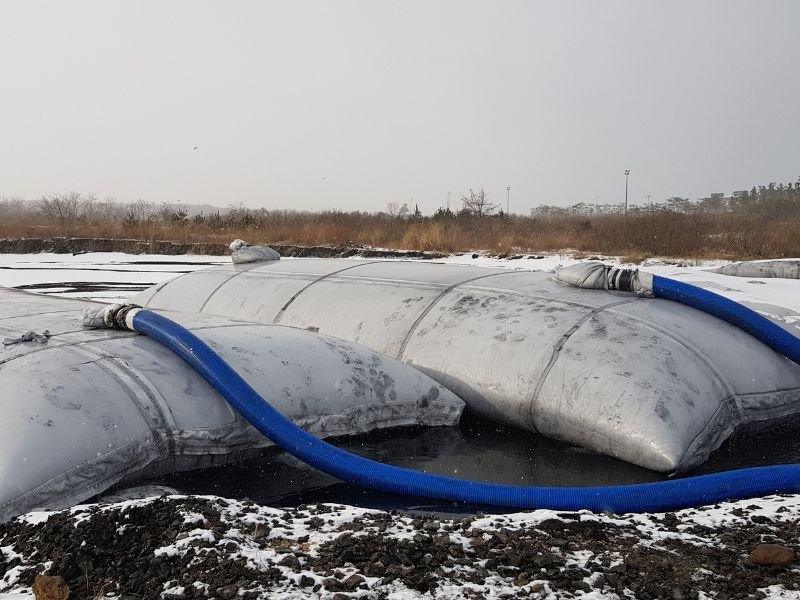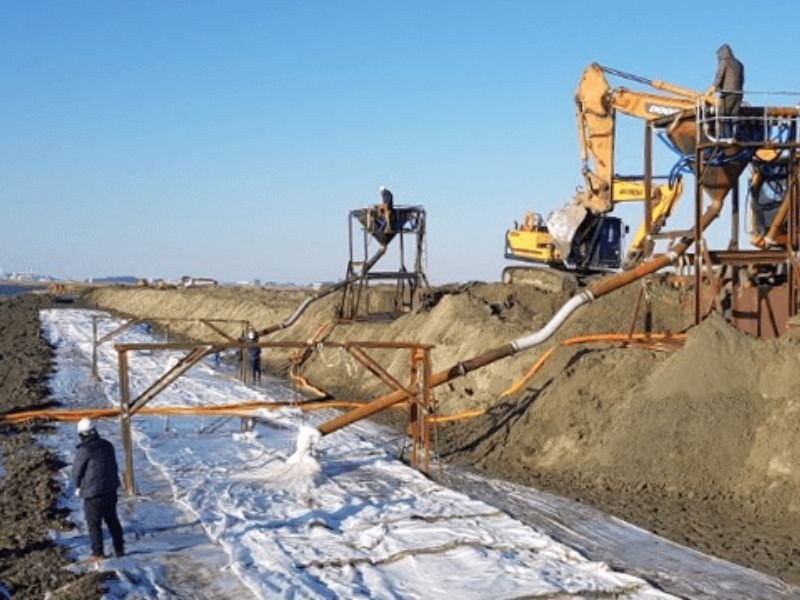

What are Geo Tubes?

Geo Tubes, also known as geotextile tubes, are large engineered containers fabricated from high-strength woven geotextile fabrics and hydraulically filled with sand, dredged sediments, slurry, or other suitable fill materials. Once filled, the tubes form stable, permeable structures that can be used for coastal protection, shoreline stabilization, dewatering, land reclamation, erosion control, and environmental containment applications.

The geotextile fabric acts as a filtration medium, allowing water to pass through while retaining the fill material inside the tube. This unique characteristic enables Geo Tubes to provide both structural support and efficient dewatering, making them a cost-effective and environmentally responsible alternative to conventional solutions such as rock revetments, concrete structures, and steel sheet piles.

Geo Tubes are widely used in marine, hydraulic, and civil engineering projects due to their durability, ease of installation, adaptability to various site conditions, and ability to utilize locally available fill materials. Depending on project requirements, Geo Tubes can be manufactured in different diameters, lengths, and geotextile grades, including high-performance PET and PP woven geotextiles for short-term or long-term applications.

Key Functions of Geotextile Tubes

1. Containment

Geo Tubes securely contain sand, dredged material, or slurry within a high-strength geotextile envelope, forming stable long-term structures.

2. Filtration

The woven geotextile fabric allows water to flow out while retaining fine particles, ensuring efficient separation of solids and liquids.

3. Dewatering

During filling, excess water is expelled through the fabric, enabling rapid consolidation of dredged sediments and sludge.

4. Erosion Control

Once installed, Geotextile Tubes reduce the impact of wave energy and currents, minimizing shoreline and riverbank erosion.

5. Structural Stabilization

Geotextile Tubes form stable, large-scale engineered elements that contribute to coastal protection, breakwaters, and revetments.

6. Hydraulic Performance

They help manage water flow, wave action, and sediment movement in marine and river environments.

7. Load Distribution

Geo Tubes distribute loads evenly over a wide area, reducing localized stress on underlying soil foundations.

Key Applications of WavePlus Geo Tubes

Coastal Protection

Geo Tubes are widely used for coastal protection and shoreline protection works, forming soft engineered barriers that reduce wave energy, control coastal erosion, and protect vulnerable coastlines from storm surge and tidal forces.

Breakwater

Geo Tubes are used in breakwater construction and marine protection systems, including submerged and emergent breakwaters for ports, harbors, and coastal infrastructure. They help reduce wave impact and create calm water zones.

Land Reclamation

Geo Tubes are widely applied in land reclamation and dredging containment projects, where they confine dredged materials, sand fill, and sediments to create stable land expansion areas for ports, industrial zones, and coastal developments.

Shoreline Stabilization 

In shoreline stabilization and coastal erosion control projects, Geo Tubes are installed to prevent beach erosion, stabilize coastal embankments, and maintain long-term shoreline profiles in dynamic marine environments.

Dewatering 

Geo Tubes are highly effective in dredged material dewatering, sludge dewatering, and slurry dewatering applications. They allow water to drain while retaining solids, reducing waste volume and improving material handling efficiency.

River Training & Flood Protection 

Geo Tubes are used in river training works, riverbank protection, and flood control systems, helping manage erosion, stabilize riverbanks, and provide temporary or permanent flood protection barriers in hydraulic environments.

Why Choose WavePlus Geotextile Tubes?

Durability

Durability

Manufactured from premium PP and PET geotextile fabrics, WavePlus Geotextile Tubes are engineered to withstand demanding hydraulic, marine, and environmental conditions while delivering long-term performance.

Customiserble

Geotextile Tubes can be manufactured in various dimensions, fabric grades, and configurations to suit specific coastal, river, marine, and infrastructure applications.

Cost-Effective

Compared to traditional rock revetments and concrete structures, Geo tubes reduce transportation, material, and installation costs while maintaining effective protection.

Engineered for Long-Term Performance

Technical Expertise

Our experienced team works closely with consultants, contractors, and project owners to provide practical, effective, and sustainable erosion control and shoreline protection solutions.

Global Supply

Global Supply

With operations in the UAE, USA, and Sri Lanka, supported by an international supply network, we efficiently serve projects across the Gulf, Asia-Pacific, Africa, Europe, and the Americas.

Industry Trust

Our solutions are specified and used by consultants, contractors, and government authorities for critical infrastructure protection, ensuring reliability in both small-scale and large-scale engineering applications.
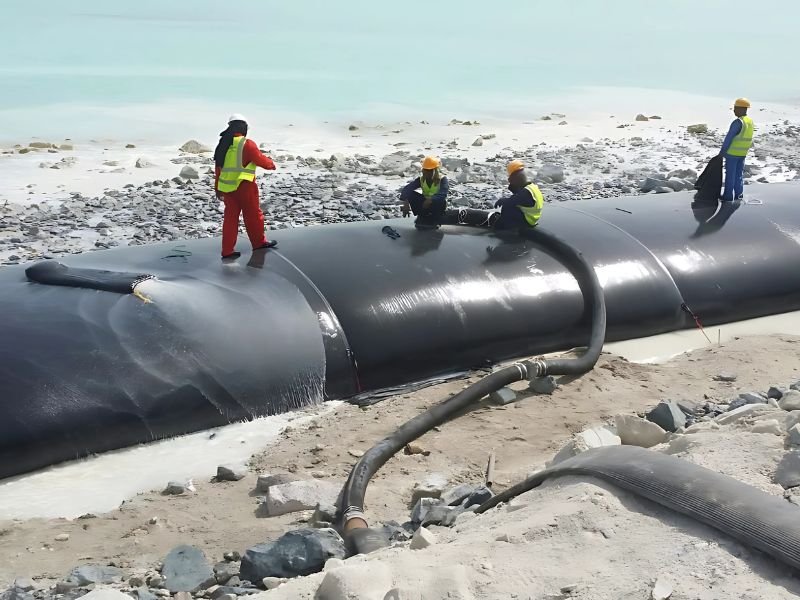
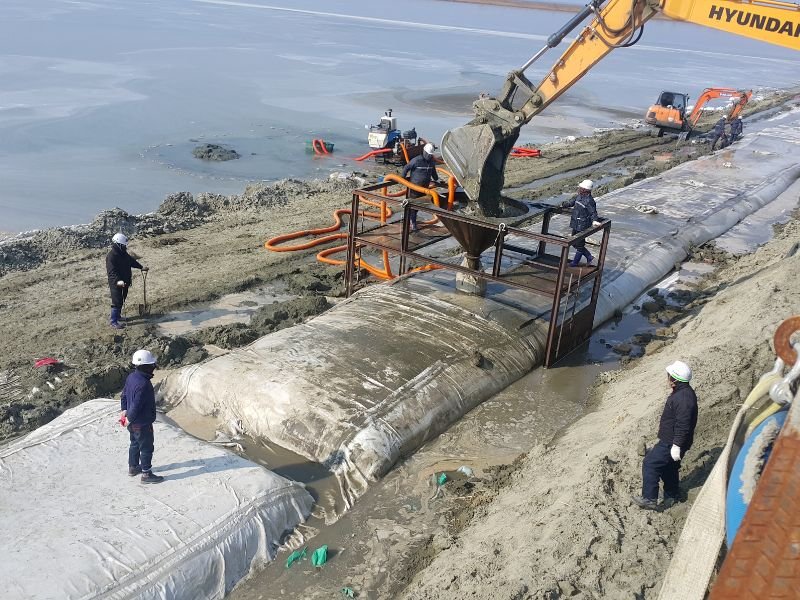
WavePlus Geo Tube Projects

Frequently Asked Questions about WavePlus Geotubes

What is the difference between PET and PP woven geotextile in Geotextile Tubes?

PET (Polyester) geotextiles offer higher tensile modulus, superior creep resistance, and better long-term load stability, making them suitable for permanent coastal and hydraulic structures. PP (Polypropylene) geotextiles provide good flexibility and cost efficiency, making them suitable for temporary works and moderate load applications.

Why is creep resistance important in Geotextile Tube design?

Creep resistance determines how much a Geo Tube will deform under sustained load over time. PET geotextiles have significantly lower creep compared to PP, which ensures better shape retention and long-term stability in coastal protection and breakwater applications.

How does tensile strength affect Geotextile Tube performance?

Higher tensile strength improves the ability of the Geo Tube to withstand filling pressures, wave forces, and installation stresses. PET woven geotextiles typically provide higher tensile modulus, resulting in reduced elongation and better structural stability under load.

What role does seam strength play in Geo Tube durability?

Seam strength is critical because Geo Tubes rely on stitched or welded joints to maintain structural integrity. High seam efficiency ensures that the tube can safely retain internal pressures during hydraulic filling and long-term service conditions.

How does hydraulic permeability affect Geo Tube dewatering performance?

Hydraulic permeability controls how efficiently water drains through the geotextile fabric. Properly designed Geo Tubes allow rapid drainage of excess water while retaining fine particles, improving consolidation and reducing overall fill volume.

What is the importance of UV resistance in Geo Tubes?

UV resistance determines how well the geotextile performs under prolonged sun exposure before and after installation. PET geotextiles generally offer better long-term UV stability, which is important for exposed coastal and beach applications.

How is design stability ensured in large diameter Geotextile Tubes?

Design stability is achieved through proper selection of geotextile strength, seam efficiency, filling method, and foundation preparation. PET-based Geo Tubes are preferred for large diameters due to their higher stiffness and reduced deformation under load.

What factors influence long-term performance of Geo Tubes?

Long-term performance depends on geotextile type (PET or PP), creep behavior, UV exposure, hydraulic conditions, fill material quality, installation accuracy, and scour protection measures at the base of the structure.

Can Geo Tubes be designed for high-energy wave environments?

Yes, Geotextile Tubes can be engineered for high wave energy zones when designed with appropriate diameter, unit weight, anchoring system, and scour protection. PET geotextile tubes are typically preferred for such demanding marine conditions.

Related Articles

Request a Quote

Ready to Work Together? Build a project with us!

Lowest Lead Time
Ships Worldwide
Best Quality
Lowest Price